
Proclaiming Christ to the Nations: The Anglican Vision for Mission in a Changing World
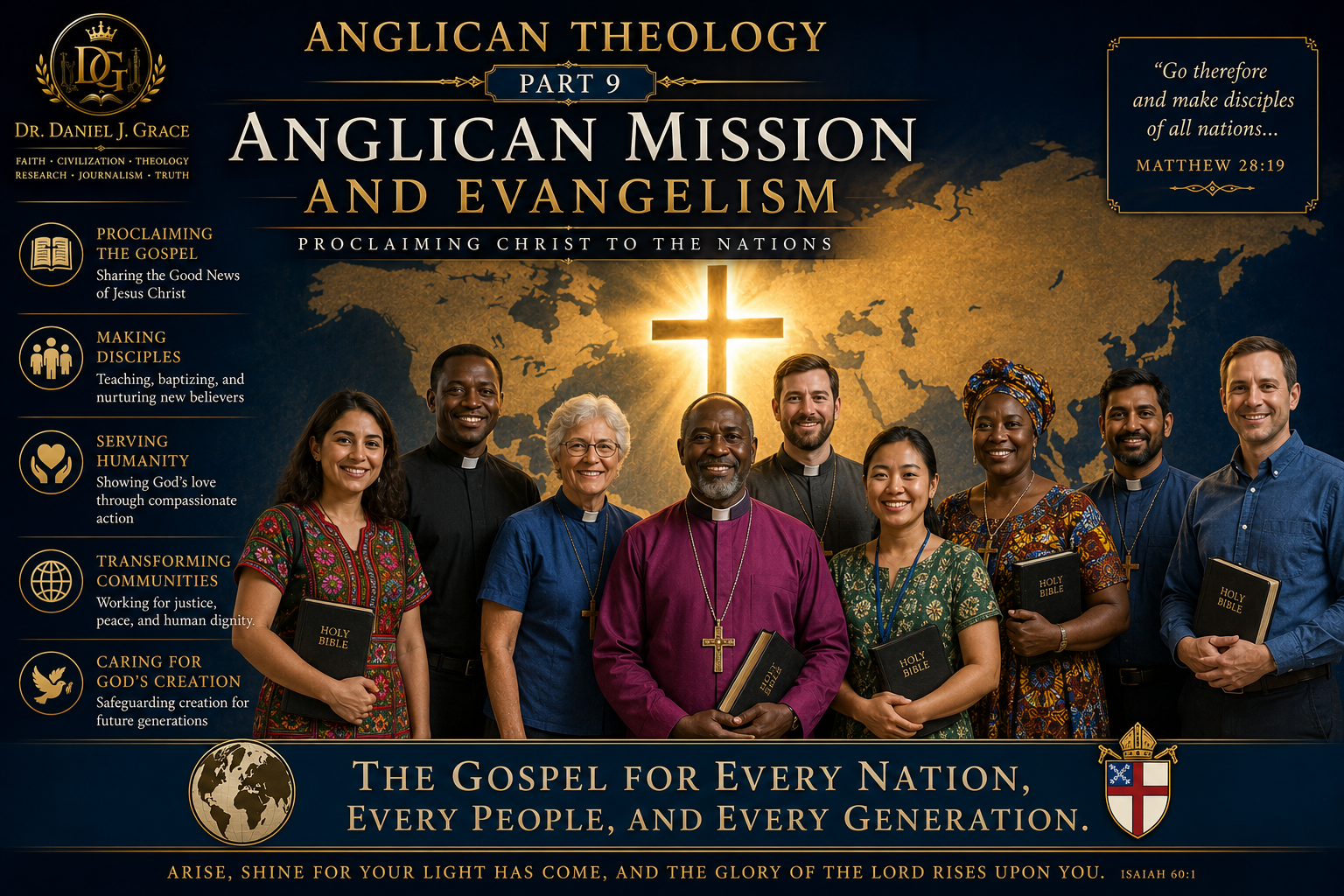
Anglican Mission and Evangelism
Introduction
From its earliest days, Christianity has been a missionary faith. The final command of Jesus before His ascension remains the Church’s enduring mission:
“Go therefore and make disciples of all nations.” (Matthew 28:19)
The Anglican tradition has always understood itself as participating in this Great Commission. While Anglicanism is often known for its liturgy, theology, and historical continuity, it is also a missionary movement. Throughout history, Anglican missionaries have crossed oceans, learned new languages, established schools, translated the Bible, founded hospitals, and planted churches across the globe.
Today Anglicanism is one of the world’s largest Christian traditions, numbering well over 85 million believers across every inhabited continent. This global presence did not happen by accident. It emerged through centuries of mission, sacrifice, evangelism, and faithful witness.
Yet the mission is more than geographical expansion. Anglican theology teaches that mission begins with God Himself. The Church does not invent mission; it participates in God’s mission to redeem the world through Jesus Christ.
This chapter looks at the biblical basis for Anglican mission, the history of Anglican evangelism, the role of social action, the problems that modern missionaries face, and the future of Christian witness in the twenty-first century.
Mission Begins with God
The foundation of Anglican mission is theological before it is practical.
Mission originates in the heart of God.
Throughout Scripture, God is portrayed as reaching out to humanity.
After Adam and Eve fell, God sought them.
After Israel wandered, God pursued them.
When humanity was lost, God sent His Son.
The entire Bible tells the story of a God who seeks, saves, and restores.
For this reason, Anglican theology often speaks of the following:
Missio Dei — The Mission of God
The Church participates in God’s work rather than creating its own agenda.
Mission therefore involves:
Proclaiming Christ
Serving humanity
Demonstrating God’s love
Inviting people into God’s kingdom
The Church is called to be God’s instrument in the world.
The Great Commission
The central biblical foundation for mission is the Great Commission.
Jesus commanded:
“Go therefore and make disciples of all nations.”
This instruction includes several elements:
Evangelism
Proclaiming the Gospel.
Discipleship
Helping believers mature in faith.
Baptism
Welcoming new believers into the Church.
Teaching
Forming Christians through Scripture.
Anglican mission seeks all four.
The goal is not simply conversion but lifelong discipleship.
The Missionary Character of the Early Church
Anglican mission draws inspiration from the New Testament Church.
The apostles carried the gospel throughout the Roman Empire.
Paul travelled extensively.
Peter preached boldly.
Early Christians crossed cultural and linguistic barriers.
Despite persecution, Christianity spread rapidly.
This missionary spirit remains central to Anglican identity.
The Church exists not only for itself but also for the world God loves.
The English Reformation and Mission
During the early stages of the English Reformation, missionary activity was not the primary focus.
The following occupied the Church:
Reforming worship
Clarifying doctrine
Establishing national stability
However, the seeds of future missions were already present.
The translation of Scripture into English reflected a missionary principle:
People should hear God’s Word in their language.
This conviction would later shape Anglican missionary efforts across the world.
Anglican Expansion Across the Globe
From the seventeenth century onwards, Anglicanism expanded beyond England.
Churches were established in:
North America
Africa
Asia
Australia
Oceania
Initially this expansion often followed trade routes and colonial movements.
However, many missionaries genuinely desired to share the Gospel.
Their work frequently involved:
Bible translation
Education
Healthcare
Church planting
While history includes both successes and mistakes, the missionary commitment itself profoundly shaped global Anglicanism.
Great Anglican Missionaries
The Anglican tradition has produced remarkable missionaries.
William Wilberforce
Though famous for opposing slavery, Wilberforce also supported worldwide missions.
Henry Martyn
Martyn translated the New Testament into Persian and other languages.
His dedication inspired generations of missionaries.
Samuel Ajayi Crowther
He was a former slave who became the first African Anglican bishop.
Crowther translated Scripture and expanded the mission throughout West Africa.
John Coleridge Patteson
He was a missionary bishop to Melanesia who ultimately gave his life for the Gospel.
These individuals demonstrated courage, sacrifice, and devotion to Christ.
Mission and Bible Translation
One of Anglicanism’s greatest contributions to world Christianity has been Bible translation.
Missionaries understood that people needed access to Scripture in their language.
Translation work has enabled millions to encounter God’s Word directly.
This commitment reflects Anglican theology’s conviction regarding the authority of Scripture.
The Bible must be accessible to all people.
Education as Mission
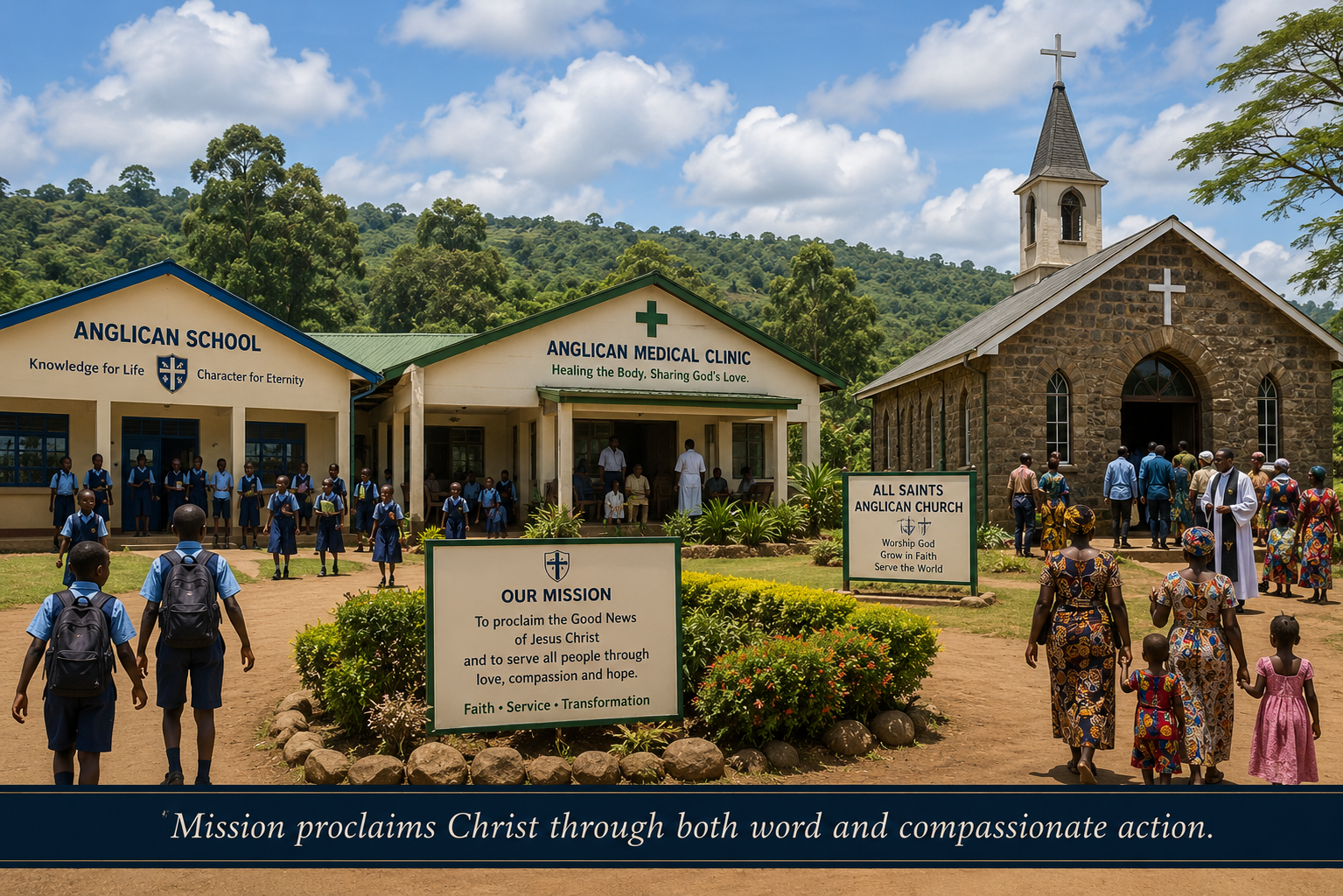
Anglican missionaries often established schools alongside churches.
Education was viewed as a ministry.
Schools helped:
Teach literacy
Provide opportunity
Promote social development
Enable Bible reading
Many respected universities throughout the world have Anglican roots.
Education became a practical expression of Christian love.
Healthcare and Compassion
Mission has never been limited to preaching alone.
Throughout history Anglicans have established the following:
Hospitals
Clinics
Orphanages
Medical missions
Jesus cared for both physical and spiritual needs.
The Anglican mission follows this example.
The Gospel addresses the whole person.
Compassion becomes a visible sign of God’s kingdom.
Evangelism and Social Action
A recurring question in Christian mission concerns the relationship between evangelism and social justice.
Should the Church prioritise preaching or practical service?
Anglican theology generally refuses to separate the two.
The Gospel must be proclaimed.
The Gospel must also be demonstrated.
Words and actions belong together.
The Church serves humanity because Christ served it.
Evangelism and compassion are partners rather than competitors.
The Five Marks of Mission
One of Anglicanism’s most influential contributions to modern mission is the development of the Five Marks of Mission.
These are:
1. To proclaim the Good News of the Kingdom.
2. To teach, baptise, and nurture new believers.
3. To respond to human need through loving service.
4. To transform unjust structures of society.
5. To safeguard creation and sustain the life of the earth.
These marks provide a balanced vision of Christian mission.
They remind the Church that God’s concern extends to every dimension of life.
The Rise of Global Anglicanism
One of the most remarkable developments of the modern era is the growth of Anglicanism in the Global South.
Today some of the largest Anglican communities are found in:
Nigeria
Uganda
Kenya
Tanzania
South Sudan
These churches are vibrant, growing, and deeply committed to evangelism.
The center of Anglicanism has increasingly shifted away from England toward Africa, Asia, and Latin America.
This transformation demonstrates the success of centuries of missionary effort.
Mission in the Digital Age
Technology has transformed the missionary landscape.
Today Christians can share the gospel through:
Websites
Social media
Podcasts
Online worship
Digital publications
Mission no longer requires crossing oceans.
The internet allows believers to reach people across the globe instantly.
Digital evangelism presents extraordinary opportunities for the Church.
At the same time, it requires wisdom and integrity.
The Gospel must remain authentic even within digital spaces.
Challenges Facing Modern Mission
The mission in the twenty-first century faces significant challenges.
Secularism
Many societies have become increasingly sceptical of religion.
Religious Pluralism
Christians engage with people from many faith traditions.
Cultural Change
Rapid social transformation creates new questions and concerns.
Political Conflict
In some regions Christians face hostility and persecution.
Digital Distraction
Modern attention spans are increasingly fragmented.
Despite these challenges, the mission of the Church remains unchanged.
Evangelism and Personal Witness
Mission is not reserved for clergy or professional missionaries.
Every Christian is called to bear witness.
Personal evangelism includes:
Sharing one’s faith
Living consistently
Serving others
Demonstrating Christ’s love
The most effective witness often occurs through ordinary relationships.
People are frequently drawn to Christianity through the example of faithful believers.
Anglican Mission in Australia
The Anglican Church has played a major role in Australian history.
Its contributions include:
Education
Healthcare
Community service
Indigenous ministry
Rural outreach
Today Anglican mission continues through local congregations, schools, charities, and overseas partnerships.
Australian Anglicans remain active participants in global mission efforts.
The Future of Anglican Mission
The future of Anglican mission will likely involve:
Greater Global Cooperation
Churches working together across national boundaries.
Digital Evangelism
Expanding Christian witness through technology.
Leadership Development
Training new generations of Christian leaders.
Urban Ministry
Responding to growing urban populations.
Youth Engagement
Helping younger generations encounter Christ.
Mission methods may change.
The message remains the same.
Jesus Christ is Lord.
Mission and the Kingdom of God
Ultimately Anglican mission is not about institutional growth.
It is about the Kingdom of God.
The Church seeks:
Salvation
Reconciliation
Justice
Peace
Transformation
Mission points beyond itself toward God’s greater purpose for creation.
Every act of evangelism, service, and discipleship participates in this vision.
Conclusion
Mission lies at the heart of Anglican identity.
From the Great Commission to modern digital ministry, Anglicans have sought to proclaim Christ to the nations.
Through preaching, education, healthcare, Bible translation, social action, and personal witness, the Church participates in God’s mission to redeem the world.
The future will bring new challenges and opportunities.
Yet the call remains unchanged.
Christ continues to send His people into the world.
The Anglican vision of mission is therefore both ancient and contemporary: proclaiming the Gospel, serving humanity, making disciples, and glorifying God among all nations.
For as long as the Church exists, its mission remains clear:
To know Christ and to make Him known.

Dr Daniel J. Grace
Faith • Civilization • Theology
Research • Journalism • Truth
🌐 danieljamesgrace.com
© 2026 Dr Daniel J. Grace. All Rights Reserved.
No part of this article may be reproduced, distributed, transmitted, or published in any form or by any means without prior written permission from the author, except for brief quotations used in academic citation, review, or research purposes.
Leave a Reply