
Faithful to the Past, Engaged with the Present, Hopeful for the Future
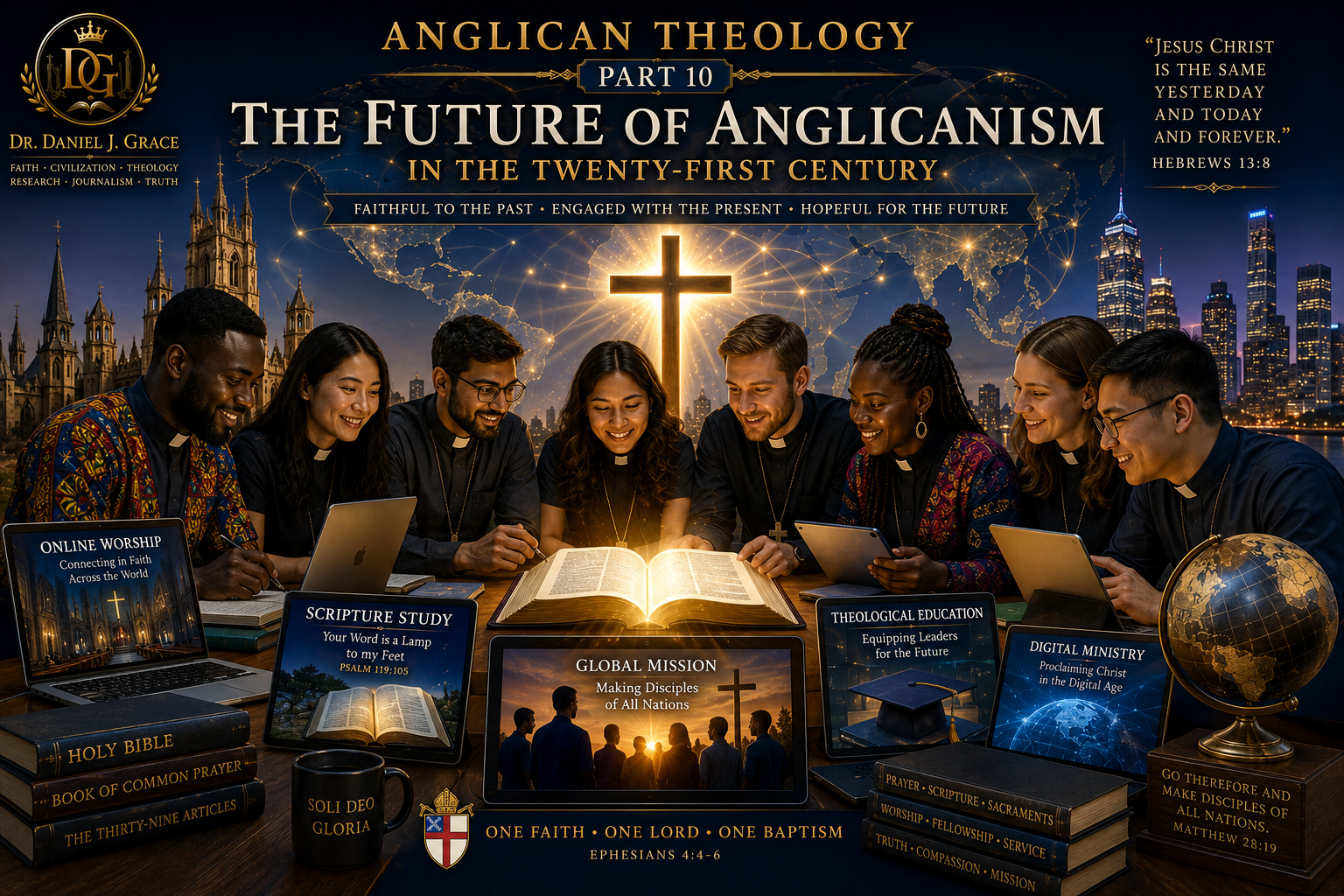
The Future of Anglicanism in the Twenty-First Century
Introduction
Every generation of Christians faces the challenge of remaining faithful to the Gospel while responding to a changing world. The Anglican Communion is no exception. Entering the twenty-first century, Anglicanism stands at a remarkable crossroads. It possesses a rich theological heritage, a global presence, and a deep commitment to Scripture, worship, and mission. Yet it also faces unprecedented challenges arising from secularisation, technological change, cultural shifts, political instability, and internal disagreements.
Some observers have predicted decline. Others foresee renewal. The reality is likely more complex. While parts of the Anglican world have experienced decreasing attendance, other regions have witnessed extraordinary growth. In Africa, Asia, and parts of Latin America, Anglican churches continue to expand rapidly. New generations of believers are emerging, bringing fresh energy and perspectives.
Institutional structures and demographic statistics will not merely determine the future of Anglicanism. It will depend upon whether Anglicans remain faithful to Jesus Christ and responsive to the leading of the Holy Spirit.
This final chapter explores the opportunities, challenges, and possibilities facing Anglicanism in the twenty-first century.
A Global Communion
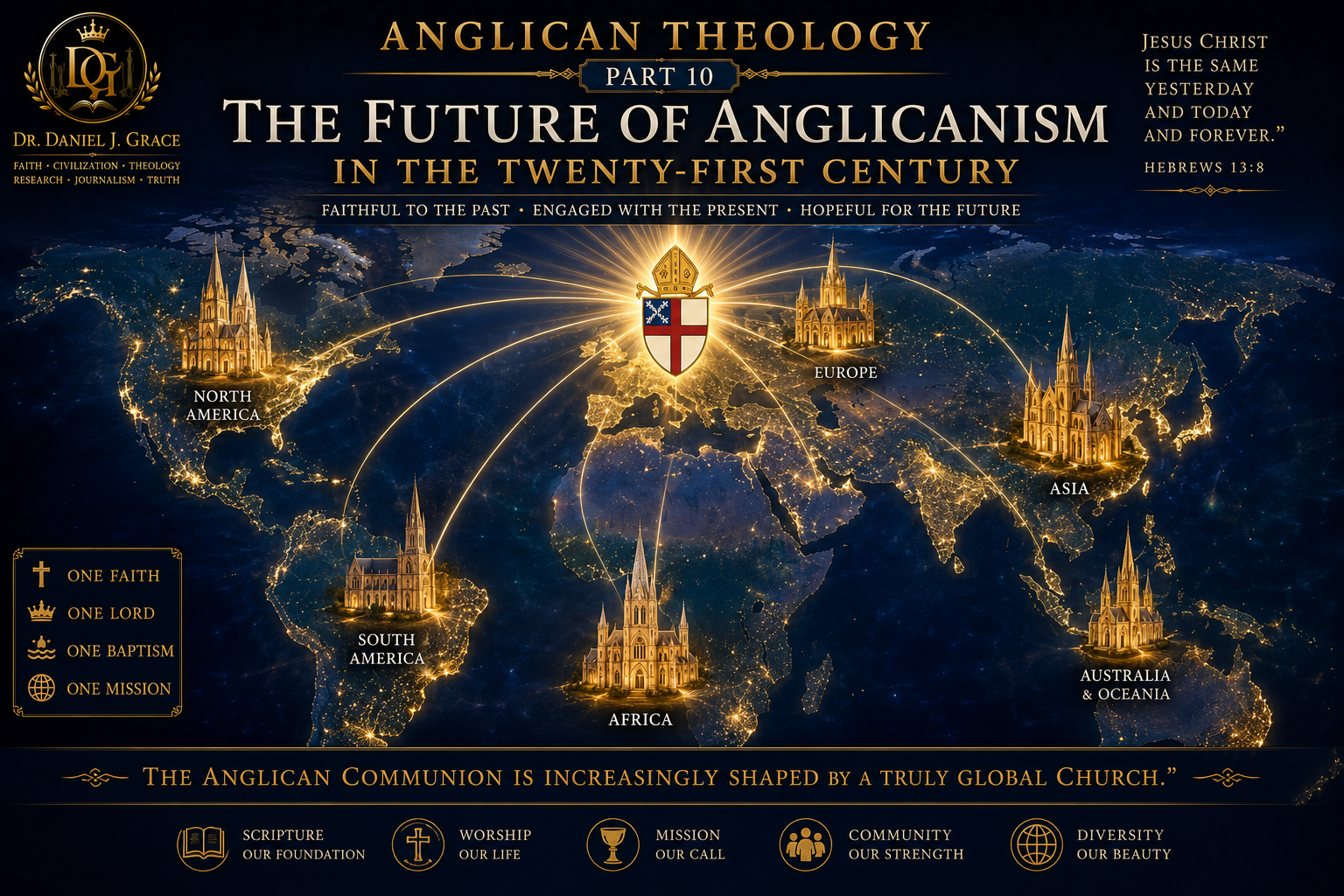
One of the most significant developments in modern Anglican history is its transformation into a truly global church.
Centuries ago Anglicanism was largely associated with England.
Today the communion spans the following:
Africa
Asia
Europe
North America
South America
Australia
Oceania
Well over 85 million Anglicans worship across diverse cultures, languages, and societies.
This global reality is both a strength and a challenge.
It demonstrates the success of the Christian mission while also requiring Anglicans to navigate profound cultural differences.
The future Anglican Church will increasingly reflect voices from every continent.
The Growth of the Global South
One of the most remarkable trends in contemporary Christianity is the rise of the Global South.
Countries such as:
Nigeria
Uganda
Kenya
Tanzania
South Sudan
have become major centers of Anglican life.
Many of these churches have the following characteristics:
Strong biblical commitment
Vibrant worship
Active evangelism
Growing congregations
Youthful membership
As a result, leadership within global Anglicanism is becoming increasingly diverse.
African and Asian perspectives will likely shape the future Anglican Communion significantly.
I
Secularization and the Challenge of Faith
While Anglicanism grows in some regions, it faces significant challenges in others.
Many Western societies have become increasingly secular.
Church attendance has declined in the following parts:
England
Europe
Australia
Canada
Religious belief is often viewed as a private matter rather than a public reality.
This environment creates new missionary challenges.
Anglicans must learn how to communicate the Gospel effectively in cultures that often lack familiarity with Christianity.
The future will require creativity, courage, and clarity.
Digital Technology and Ministry
Technology has transformed human communication.
The Church now operates in a digital environment unimaginable to previous generations.
Today Anglicans use:
Livestream worship
Online Bible studies
Podcasts
Digital publishing
Social media ministry
The COVID-19 pandemic accelerated many of these developments.
Digital ministry offers remarkable opportunities:
Global outreach
Educational resources
Evangelism
Community building
However, technology also presents risks.
Digital engagement must never replace authentic Christian fellowship.
The future Anglican Church must learn to balance online ministry with embodied worship and community.
The Rise of Digital Theology
Technology is creating new theological questions.
Future Anglican theologians will address issues involving:
Artificial intelligence
Biotechnology
Digital identity
Virtual communities
Ethics of emerging technologies
These topics require careful reflection.
Anglicanism’s historic commitment to Scripture, reason, and tradition provides valuable tools for engaging these questions responsibly.
The Church must speak thoughtfully into an increasingly technological world.
Youth and the Future Church
Young people will play an important part in determining Anglicanism’s future.
Many churches struggle to engage younger generations.
At the same time, many young Christians seek the following:
Authenticity
Community
Meaning
Spiritual depth
The Anglican tradition possesses resources capable of addressing these desires.
Its combination of ancient worship and contemporary relevance offers a compelling alternative to both shallow consumerism and spiritual confusion.
The challenge is communicating these treasures effectively.
Diversity Within Unity
The Anglican Communion includes remarkable diversity.
Its members differ regarding:
Culture
Politics
Worship styles
Social issues
This diversity can create tension.
Yet it also reflects the universal nature of the Church.
The future Anglican Communion must continue seeking unity without demanding uniformity.
Christian unity ultimately rests not in complete agreement on every issue but in shared faith in Jesus Christ.
Maintaining this balance will remain one of Anglicanism’s greatest challenges.
Environmental Stewardship
Climate change and environmental concerns increasingly influence global discussions.
Many Anglican leaders have emphasised creation care as part of Christian discipleship.
This reflects biblical teaching that humanity has responsibility for creation.
Future Anglican missions will likely include the following:
Environmental advocacy
Sustainable development
Stewardship education
Care for creation is increasingly viewed as part of faithful Christian witness.
Urbanization and New Mission Fields
The world is becoming increasingly urban.
Large cities continue to grow rapidly.
Urban ministry presents unique opportunities and challenges.
Cities often contain:
Economic inequality
Cultural diversity
Social isolation
Religious pluralism
Future Anglican mission will require creative approaches to urban evangelism and community development.
The Church must learn how to serve increasingly complex urban societies.
Leadership Development
Strong leadership remains essential for the Church’s future.
Anglican institutions must continue preparing:
Clergy
Theologians
Educators
Missionaries
Lay leaders
Theological education will remain vital.
Future leaders must be the following:
Biblically grounded
Spiritually mature
Culturally aware
Mission focused
Leadership development represents one of the most important investments the Church can make.
Anglican Education and Scholarship
Anglicanism has long valued intellectual engagement.
Universities, seminaries, and research institutions continue to play important roles.
Future Anglican scholarship will address the following:
Theology
Ethics
History
Science and faith
Social issues
Academic work helps the Church engage thoughtfully with contemporary challenges.
Faith and reason remain important partners within Anglican tradition.
Ecumenical Relationships
The future of Christianity will increasingly involve cooperation among different Christian traditions.
Anglicans continue engaging in dialogue with:
Roman Catholics
Orthodox Christians
Lutherans
Methodists
Evangelicals
These relationships seek greater understanding and unity.
While differences remain, shared witness strengthens the Christian mission.
The future Church may discover new opportunities for cooperation and partnership.
The Continuing Importance of Worship
Despite changing circumstances, Anglican worship remains central.
The Book of Common Prayer and related liturgical traditions continue shaping Christian life.
Many people find Anglican worship appealing because it offers the following:
Reverence
Beauty
Stability
Biblical depth
Future generations may find increasing value in these ancient practices.
In a rapidly changing world, liturgy provides continuity and spiritual grounding.
Hope for Renewal
History demonstrates that Christianity often experiences renewal during difficult periods.
Periods of decline are frequently followed by periods of growth.
The Anglican tradition has repeatedly undergone reform, revival, and renewal.
Future renewal may emerge through:
Prayer
Evangelism
Discipleship
Mission
Spiritual awakening
The Holy Spirit continues to work within the Church.
For this reason Christians remain hopeful.
The Central Question
Ultimately the future of Anglicanism depends upon one question:
Will Anglicans remain faithful to Jesus Christ?
Institutions may change.
Methods may evolve.
Technology may advance.
Cultures may transform.
Yet the Church’s foundation remains unchanged.
Jesus Christ remains:
Savior
Lord
Teacher
King
Faithfulness to Him remains the Church’s primary calling.
Conclusion
The future of Anglicanism is neither a story of inevitable decline nor guaranteed success.
It is a story still being written.
The Anglican Communion enters the twenty-first century with remarkable strengths:
A rich theological heritage
A global presence
Deep liturgical traditions
Strong missionary foundations
Growing churches across the Global South
At the same time, it faces significant challenges involving secularisation, technology, cultural change, and internal diversity.
Yet Christians do not place their hope in institutions alone.
Their hope rests in God.
The same God who guided the Church through centuries of history continues to guide it today.
The future of Anglicanism therefore remains hopeful.
Its calling is clear:
To proclaim Christ faithfully, worship God reverently, serve humanity compassionately, and bear witness to the Gospel until Christ comes again.

Dr Daniel J. Grace
Faith • Civilization • Theology
Research • Journalism • Truth
🌐 danieljamesgrace.com
© 2026 Dr Daniel J. Grace. All Rights Reserved.
No part of this article may be reproduced, distributed, transmitted, or published in any form or by any means without prior written permission from the author, except for brief quotations used in academic citation, review, or research purposes.
Leave a Reply