
How Orthodox Christians Experience the Presence of God Through Worship, Prayer, and daily spiritual life.
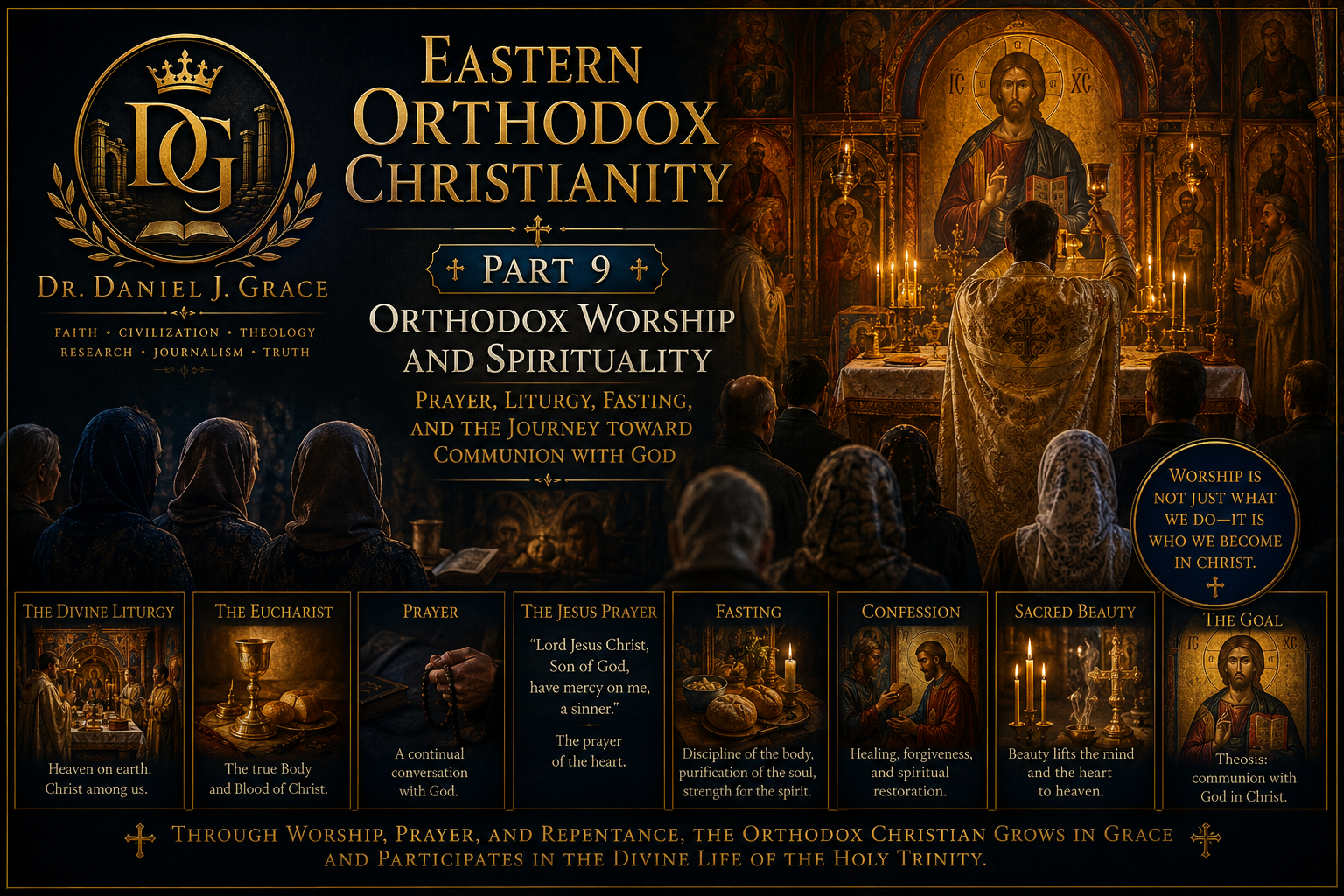
Orthodox Worship and Spirituality
Prayer, Liturgy, Fasting, and the Journey Toward Communion with God
Introduction
At the heart of Eastern Orthodox Christianity lies worship.
Orthodoxy is often described not merely as a system of beliefs, but as a way of life centred on the worship of the Triune God.
For Orthodox Christians, theology is not simply something to be studied.
It is something to be lived.
The doctrines of the Church are experienced through prayer, liturgy, fasting, repentance, and participation in the sacramental life of the Church.
Orthodox spirituality seeks transformation.
The goal is not merely religious knowledge but communion with God.
Every aspect of Orthodox worship aims to draw believers deeper into the life of Christ.
The Orthodox Church believes that worship should engage the whole person:
Mind
Heart
Body
Soul
This holistic approach has shaped Orthodox spirituality for nearly two thousand years.
In this chapter, we will explore the rich traditions of Orthodox worship and spiritual life.
Worship as Participation in Heaven
One of the most important Orthodox beliefs is that worship is not merely a human activity.
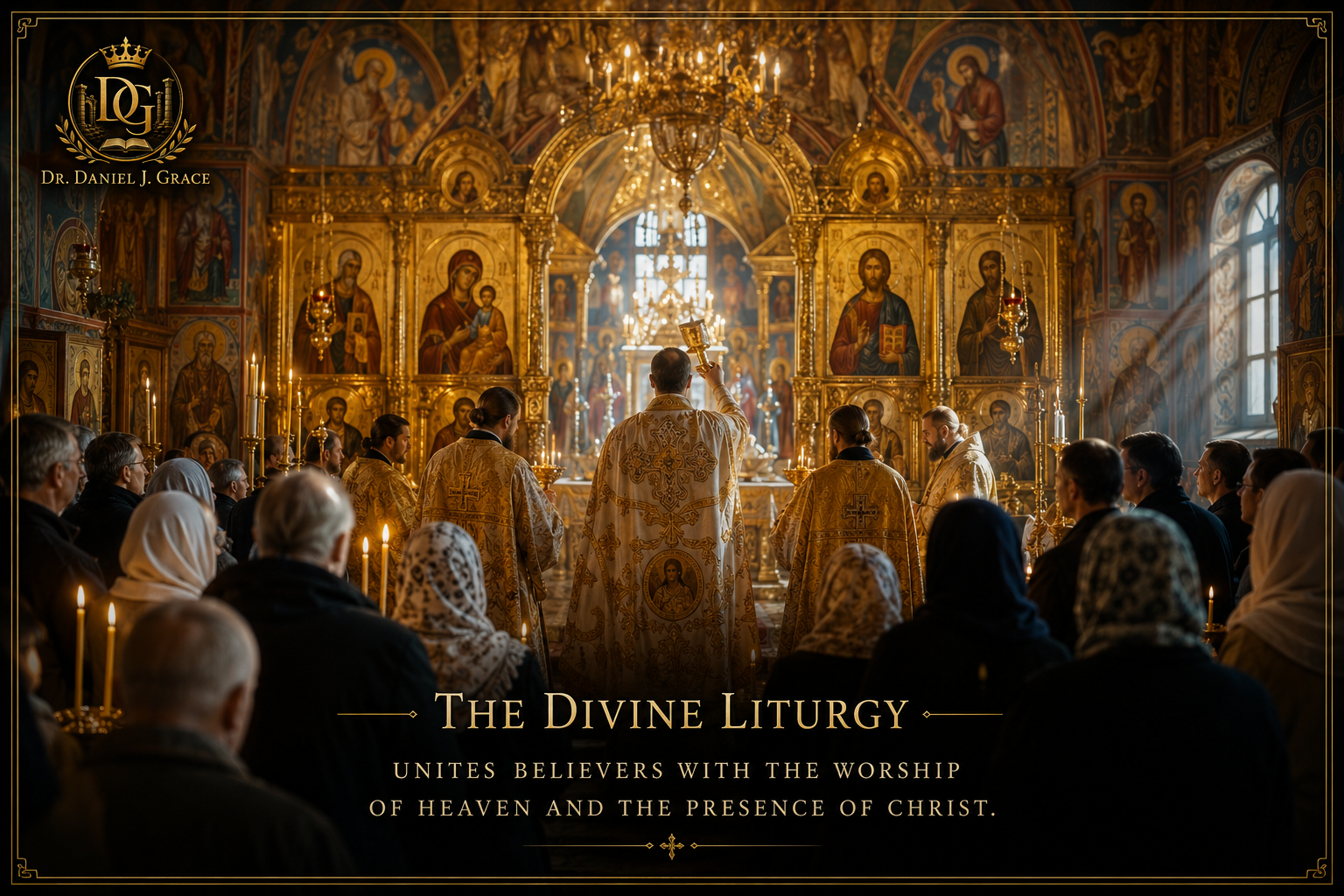
Orthodox Christians believe that when the Church gathers for worship, believers participate in the worship of heaven itself.
The Divine Liturgy is viewed as:
Heavenly worship made present on earth
A meeting between heaven and earth
A foretaste of God’s Kingdom
This perspective shapes the entire atmosphere of Orthodox worship.
Everything within the church building points toward eternal realities.
The Divine Liturgy
The centre of Orthodox worship is:
The Divine Liturgy
The Divine Liturgy is the principal service of the Church.
Its purpose is:
Worship of God
Proclamation of Scripture
Celebration of the Eucharist
The most common liturgy is:
The Divine Liturgy of Saint John Chrysostom
Another important form is:
The Divine Liturgy of Saint Basil the Great
These liturgies have been celebrated for centuries and remain largely unchanged.
Orthodox Christians view this continuity as a sign of faithfulness to Apostolic Tradition.
The Structure of the Liturgy
The Divine Liturgy generally consists of two major sections:
The Liturgy of the Word
Including:
Psalms
Prayers
Scripture readings
Sermon
The Liturgy of the Faithful
Including:
Eucharistic prayers
Consecration
Holy Communion
This structure reflects ancient Christian worship patterns dating back to the earliest centuries of the Church.
The Eucharist
The Eucharist occupies the center of Orthodox worship.
Orthodox Christians believe the Eucharist is far more than a symbol.
It is a genuine participation in the Body and Blood of Christ.
The Eucharist nourishes believers spiritually and strengthens their union with God.
Orthodox Christians approach Holy Communion with reverence, preparation, and prayer.
The Eucharist stands at the heart of Orthodox spiritual life.
Sacred Beauty in Worship
Orthodox worship seeks to reflect the beauty of God’s Kingdom.
Churches often contain:
Icons
Frescoes
Candles
Incense
Chanting
Gold ornamentation
These elements are not intended to entertain.
They help believers encounter God.
Orthodox Christians believe beauty can lead people toward truth.
Sacred beauty therefore serves a spiritual purpose.
The Role of Icons
Icons remain central to Orthodox worship.
They remind believers that:
Christ became human.
The saints remain alive in Christ.
Heaven is real.
Icons help focus prayer and contemplation.
They are not worshipped.
Rather, they direct attention toward the individuals depicted.
Orthodox churches are often filled with icons because the Church sees them as visible expressions of the Incarnation.
Incense and Symbolism
Incense plays an important role in Orthodox worship.
Its use reflects biblical imagery.
Incense symbolises:
Prayer rising to God
Holiness
Divine presence
Throughout Scripture incense appears in worship.
Orthodox Christians continue this ancient practice.
The fragrance of incense helps create an atmosphere of reverence and prayer.
Chant and Sacred Music
Orthodox worship traditionally uses chanting rather than instrumental music.
The human voice occupies a special place in worship.
Chanting:
Proclaims Scripture
Expresses prayer
Teaches theology
Orthodox hymns often contain profound theological insights.
Many believers learn doctrine through liturgical singing.
Sacred music becomes a form of prayer.
The Liturgical Calendar
Orthodox spirituality follows a rich liturgical calendar.
The church year includes:
Feasts
Fasts
Saints’ days
Holy seasons
These observances help believers remember God’s work throughout history.
The calendar shapes spiritual life and provides rhythm throughout the year.
Orthodox Christians experience time through the lens of salvation history.
Great Lent
One of the most important seasons is:
Great Lent
This period prepares believers for Easter (Pascha).
Great Lent emphasises:
Repentance
Prayer
Fasting
Charity
Orthodox Christians regard Lent as a spiritual journey toward renewal.
The season encourages self-examination and deeper commitment to Christ.
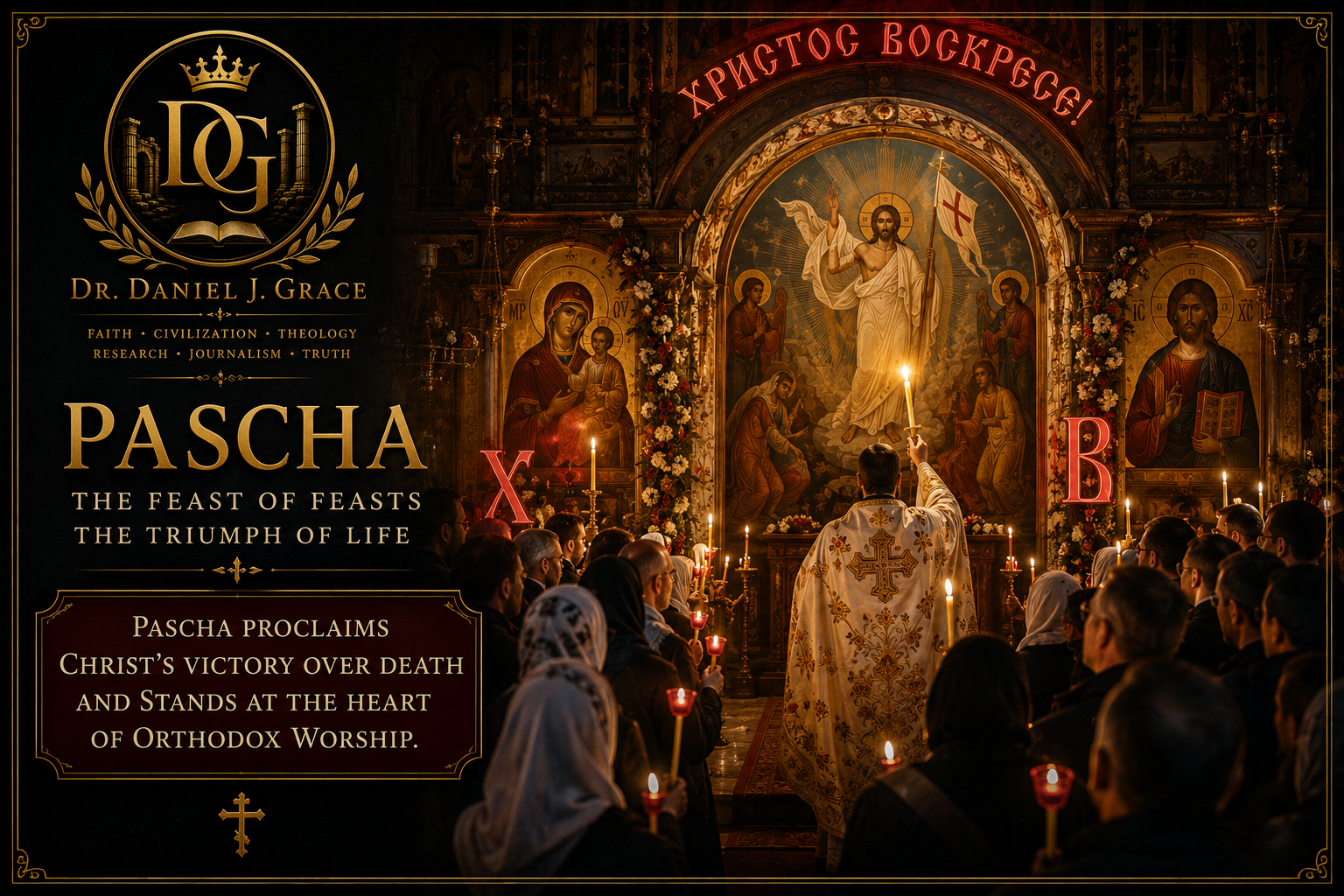
Pascha: The Feast of Feasts
The greatest celebration in Orthodoxy is:
Pascha
The Orthodox celebration of Easter.
Pascha commemorates Christ’s
Resurrection
Victory over death
Triumph over sin
Orthodox Christians often call Pascha:
“The Feast of Feasts.”
The resurrection stands at the centre of Christian faith and worship.
Every aspect of Orthodox spirituality ultimately points toward the risen Christ.
Prayer in Daily Life
Orthodox spirituality extends beyond church services.
Prayer remains central to daily life.
Many Orthodox Christians maintain regular prayer routines.
Morning and evening prayers help believers remain connected to God throughout the day.
Prayer becomes a way of life rather than an occasional activity.
The Jesus Prayer
Among the most beloved Orthodox prayers is:
“Lord Jesus Christ, Son of God, have mercy on me, a sinner.”
This prayer is known as:
The Jesus Prayer
Orthodox Christians often repeat it throughout the day.
The prayer cultivates:
Humility
Repentance
Attention to God
The Jesus Prayer plays an important role in Orthodox spirituality and monastic life.
Hesychasm
Closely connected to the Jesus Prayer is:
Hesychasm
The word means:
Stillness
Silence
Hesychast spirituality emphasises the following:
Inner prayer
Quietness
Awareness of God’s presence
The goal is not escape from the world but deeper communion with God.
This tradition has profoundly influenced Orthodox spirituality.
Fasting and Spiritual Discipline
Fasting occupies a significant place in Orthodox life.
Orthodox Christians fast not because food is evil but because discipline strengthens spiritual growth.
Fasting encourages:
Self-control
Repentance
Dependence upon God
Major fasting periods include:
Great Lent
Advent Fast
Apostles’ Fast
Dormition Fast
Fasting remains one of Orthodoxy’s most distinctive spiritual practices.
Charity and Compassion
Orthodox spirituality emphasises practical love.
Prayer must lead to action.
Orthodox Christians are called to:
Help the poor
Care for the sick
Support those in need
The Church teaches that worship and compassion belong together.
Love of God should produce love for neighbour.
Confession and Repentance
Repentance occupies a central place in Orthodox spirituality.
Orthodox Christians regularly participate in:
Confession
Confession provides:
Healing
Forgiveness
Spiritual guidance
The sacrament encourages believers to confront sin honestly and seek God’s mercy.
Repentance is viewed as an ongoing process rather than a one-time event.
Spiritual Fathers and Mothers
Orthodox spirituality often emphasises spiritual guidance.
Many believers seek counsel from:
Priests
Monks
Experienced spiritual mentors
These individuals help guide believers in their spiritual journey.
The goal is wisdom rather than control.
Spiritual guidance has long been an important feature of Orthodox life.
Monastic Influence
Although most Orthodox Christians are not monks, monastic spirituality influences the entire Church.
Monasteries serve as:
Centers of prayer
Places of pilgrimage
Sources of spiritual wisdom
Monastic traditions help preserve ancient practices of prayer and contemplation.
Their influence extends throughout Orthodoxy.
Worship and Theosis
The ultimate aim of Orthodox worship is as follows:
Theosis
Participation in the life of God.
Every aspect of worship contributes to this goal:
Prayer
Sacraments
Fasting
Scripture
Charity
Orthodox spirituality seeks transformation through divine grace.
Worship becomes the pathway toward union with God.
Worship in the Modern World
Modern society often values speed, efficiency, and entertainment.
Orthodox worship offers something different.
It emphasises:
Reverence
Mystery
Continuity
Contemplation
Many people find Orthodoxy appealing because of its depth and stability.
Its worship provides a sense of connection with the ancient Christian faith.
Why Orthodox Spirituality Matters Today
Many people experience:
Anxiety
Isolation
Distraction
Orthodox spirituality offers a different vision.
It calls believers to:
Silence
Prayer
Community
Worship
These practices help Christians cultivate more profound awareness of God’s presence.
Orthodoxy reminds believers that spiritual growth requires intentional effort and lifelong commitment.
Conclusion
Orthodox worship and spirituality form the heart of Eastern Christian life.
Through liturgy, prayer, fasting, sacraments, sacred beauty, and acts of compassion, believers seek communion with God.
The Divine Liturgy unites heaven and earth.
The Eucharist nourishes spiritual life.
Prayer transforms the heart.
The Jesus Prayer cultivates continual awareness of Christ.
Fasting strengthens discipline.
Pascha celebrates victory over death.
Together these practices guide believers on the journey toward theosis and deeper participation in the life of God.
In the next chapter, we will explore:
Eastern Orthodoxy in the Modern World
How the Orthodox Church faces contemporary challenges while remaining faithful to its ancient traditions and global mission.
Dr Daniel J. Grace
Faith • Civilization • Theology
Research • Journalism • Truth
© 2026 Dr Daniel J. Grace. All Rights Reserved.
No part of this article may be reproduced, distributed, transmitted, or published in any form or by any means without prior written permission from the author, except for brief quotations used in academic citation, review, or research purposes.
Leave a Reply